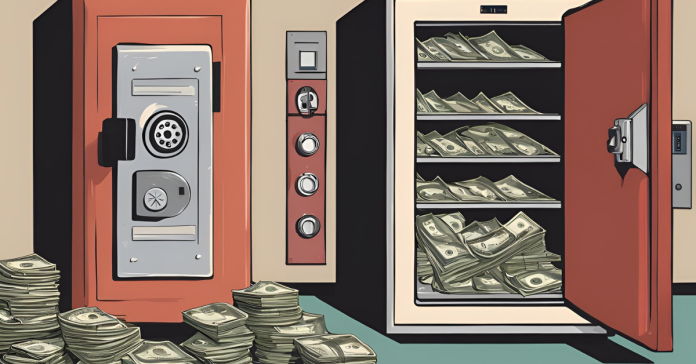


So, how about something that everyone has been thinking of recently. We are in strange economic days where inflation is having its way, the banks are paying you near pennies in interest, and your mattress is even beginning to pass through the test of passing to be a valid financial institution. The question of whether you should put your money in the bank or keep it in cash isn’t as straightforward as your parents made it sound back in the day.
The thing is that both of them are more or less sucky at this point, however, one is certainly less sucky than the other depending on the circumstances. And no I will not tell you, as well as not give you, some stable and uninspired answer, like it depends on your personal circumstances, without my having told you what your personal circumstances are. It is time to look at the reality of the situation as to where your hard-earned money is really supposed to live in 2026.
Why This Decision Actually Matters More Than Ever
The personal finance scenery has changed drastically. We do not live in the same economic conditions that our parents did. The interest rates have been dancing around, inflation has been gnashing the buying power of people to an extent no one has ever heard of and the old rule of just saving your money in the bank does not feel the same way it felt before.
When you’re trying to figure out should you put your money in the bank or keep it in cash, you really mean: so what will help me hold my money without losing value and yet have it conveniently available? It is the billion-dollar question that we are all grappling with at the moment.
The Bank Option: What You’re Actually Getting
The first and the most obvious one is the option that financial advisors have been foisting on people over the years. The banks should be the safe and responsible one. You save your finances, they hold them safe, perhaps you get interests on it and all are satisfied, right?
Well, this is what is really happening in 2026. Most of the traditional savings accounts are only paying interest rates that you would laugh had it not been so depressing. We are discussing rates that only run to 0.5 per cent to 1 per cent at most large banks. In the meantime the inflation has been pegged at about 3-4 per cent so that your bank money is literally losing its value by the day.
But before you write off banks entirely, there are some legitimate reasons why you should put your money in the bank or keep it in cash there. The FDIC coverage up to 250, 000 dollars implies that your funds are insured even when the financial institution collapses. That’s not nothing. You also acquire convenience – debit cards, Internet transfers, automatic billing. Do you think you can do all of that with a stack of cash under your bed?
The High-Yield Savings Account Reality
But now, now, since you are going to use a bank, at least be clever about it. Some online banks currently are offering savings accounts with high yield rates of around 4-5%. That is even competitive with inflation. There are many banks competing over your deposits such as Ally, Marcus and others so you have a choice.
The catch? These rates may evolve even more rapidly than a Tik Tok trend. The Federal Reserve sneezes, and your 5 per cent. rate is down to 3. However volatile it is, it is still superior to having your money in the checking account making no interest at all.
When Cash Actually Makes Sense
Interestingly, this is where it comes in. It is understandable to retain a small amount of money, and I am not referring to doomsday prepper (although, you do you). Cash provides instant access without restless waiting until ATM withdrawals or frozen accounts in case of a system crash.
At times of natural disasters, cyber attacks or glitches within banking systems, cash is king. However, do you recall the episode when this large bank suffered a system outage in 2024 and people were unable to access their money during days? Not bad, these fellows with a few dollars in the bank were not sweating.
The sweet spot? Always have sufficient cash to sustain an estimated one months of costs. That is your crisis, everything-is-breaking-down money. Something extraneous of that is pure wastage of money to the inflation, standing there with your hands in your hair.
The Inflation Problem Nobody Wants to Talk About
Let’s address the elephant in the room. When you’re debating should you put your money in the bank or keep it in cash, you are posing the wrong question. The two alternatives are gradually bleeding resources due to inflation. The same $100 bill you have today will purchase you less of what you shall have tomorrow in your wallet or in one of your bank accounts.
This is the reason why intelligent individuals in 2026 are not confining all their cash in both locations. They’re diversifying. Others in high-yield savings towards the emergency fund and short-term saving goals. Others in investment take into consideration long term growth. Perhaps a few in I-bonds or Treasury bills which actually keep in step with inflation.
The error that people commit is believing that it is an either-or option. It’s not. Your money must be elsewhere employed in other manners.
What Banks Don’t Want You to Know
It is the banks that profit on your deposits. They steal your money and give you very little in interest and lend it out at a very high rate. That is their entire business model. By having huge sums of money in an ordinary checking or savings account, you are essentially lending them free of interest.
And those fees? Don’t even get me started. It charges monthly maintenance, overdraft charges, ATM charges in case you want to use the other bank. They will nickel and dime you to death and pay you nicks on your balance. It is actually amazing how they have succeeded to keep your money in their hands at such a high cost.
That is why on the occasion when one questions whether you should put your money in the bank or keep it in cash, I would tell them: in case you are using a bank, you have to ensure that you are getting something out of it. Free charge, low interest rates, customer care. Otherwise, what’s the point?
The Security Factor
Honesty discussion: it is dangerous to have huge sums of money in the house. Fires in the house, floods, theft – all these will destroy your cash stash within minutes. And no insurance covers it, as money in the bank does. That’s just gone.
The pragmatic issue of huge amounts of money is also there. Attempt to purchase a car or put money down on a house. You’ll receive so many suspicious glances and most likely will cause certain money laundering investigations. The contemporary economy is established to be electronic transactional, whether we want it or not.
But small amounts of cash? Absolutely keep some around. It is useful, it is intelligent and it provides alternatives in case electronic systems breakdown.
Looking Toward the Future
The financial sphere will continue to change as we proceed into 2026 and further. Online money, enhanced banking applications, enhanced investment portals- technology is making money flow to where it is required easier. The dualistic model of bank or cash is becoming irrelevant.
The real answer to should you put your money in the bank or keep it in cash is that you must have a plan, not an easy solution. Keep actual cash at home of one month expenses. The high-yield savings account should hold three to six months of emergency expenses. Invest all the rest in those investments that may really keep pace with inflation.
What Actually Makes Sense in 2026
Stop considering this as a case of either or. You require both, and other alternatives as well. This is how a smart money system should be: cash in an envelope to spend now and in the event of an emergency, a high interest savings account to cover your short term plans and emergency fund, and investment accounts to cover the rest.
The proportion in any one bucket will be based on your case. Young and stable? Hold fewer and less cash and savings and more investments. Elderly or unpredictable about employment? Move further towards liquid savings. What is beautiful about 2026 is that it is easier than ever to transfer money between these options.
When people ask should you put your money in the bank or keep it in cash, the question that they are actually posing is: how can I defend and increase my wealth? It is not about choosing this or that. It is applying every tool to what it is good at.
The Bottom Line
Banks are convenient, insured by the FDIC, and (with the right ones) competitive interest rate that can even keep up with inflation. Cash is instant and operative in times of failure of the systems. And both to inflation lose you so much as that.
The winning strategy? Bank most of your liquid savings, have a moderate amount of cash on hand in case of emergencies, and do not stop at that. Get the rest in investments which can in fact increase quicker than inflation. Your money must be where it is not just one working in a job, but in different jobs, all aimed at securing and increasing your wealth.
That’s the real answer. Not bank or cash. Bank and cash and investments and not likely all the others either. Here is contemporary personal finance Welcome to the complex world of personal finance You have choices, at least it is complicated.